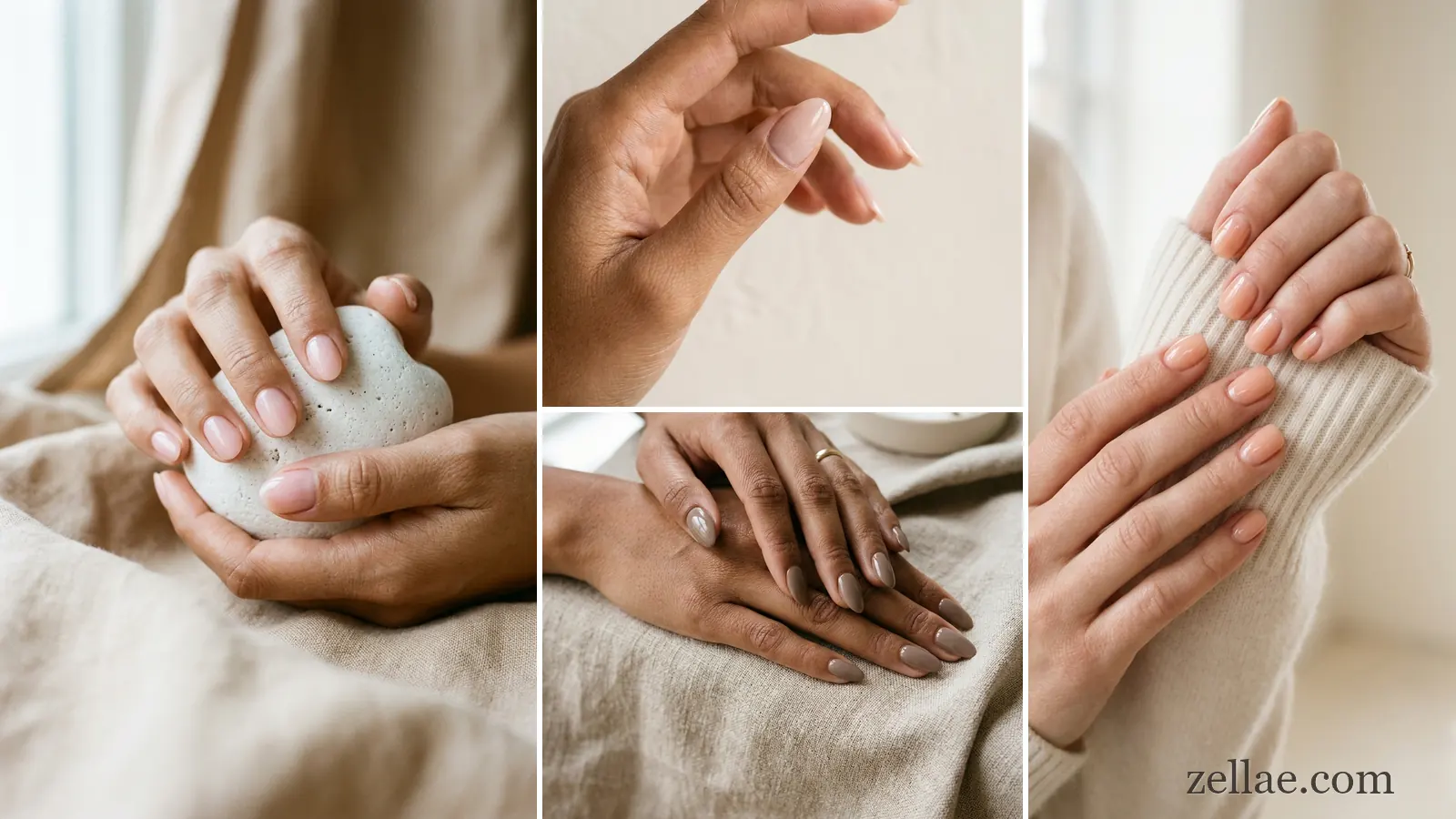
Staring at a salon booking menu debating BIAB vs dip powder nails? I’ve been in that exact chair. Both promise three to four weeks of chip-free shine, yet they behave nothing alike on real nails. After testing both systems for our nail care guides and helping readers repair thin nails after gel removal, the real gap comes down to chemistry and prep.
Most salons lump these services together as “strengthening manicures.” That’s a mistake. A BIAB manicure uses flexible, brush-on builder gel that moves with bendy nails and rebalances smoothly at your next fill. Dip powder takes the opposite route, bonding cyanoacrylate resin and finely milled acrylic into rigid armor. You skip the UV lamp, sure, but you also take on real hygiene and removal drawbacks.
Following our editorial testing standards, we compared every detail that actually matters: wear time, thickness, shared-jar sanitation, allergy risks, and six-month salon spend. You’ll walk into your next appointment knowing exactly what to book.
The Editor’s Quick Verdict: Book a BIAB manicure if you have weak, thin, or bendy nails and want a slim, natural look that stays fresh with simple infills instead of monthly acetone soaks. Pick a dip powder manicure only if you strictly skip UV/LED lamps or need hard-shell impact protection. Just confirm your salon pours powder over your nail instead of dipping into shared jars.
Jump to a section: Quick Compare · The Chemistry · 7 Honest Differences · Which to Book · Salon Questions · Pro & DIY Tips · FAQs
BIAB vs Dip Powder Nails at a Glance
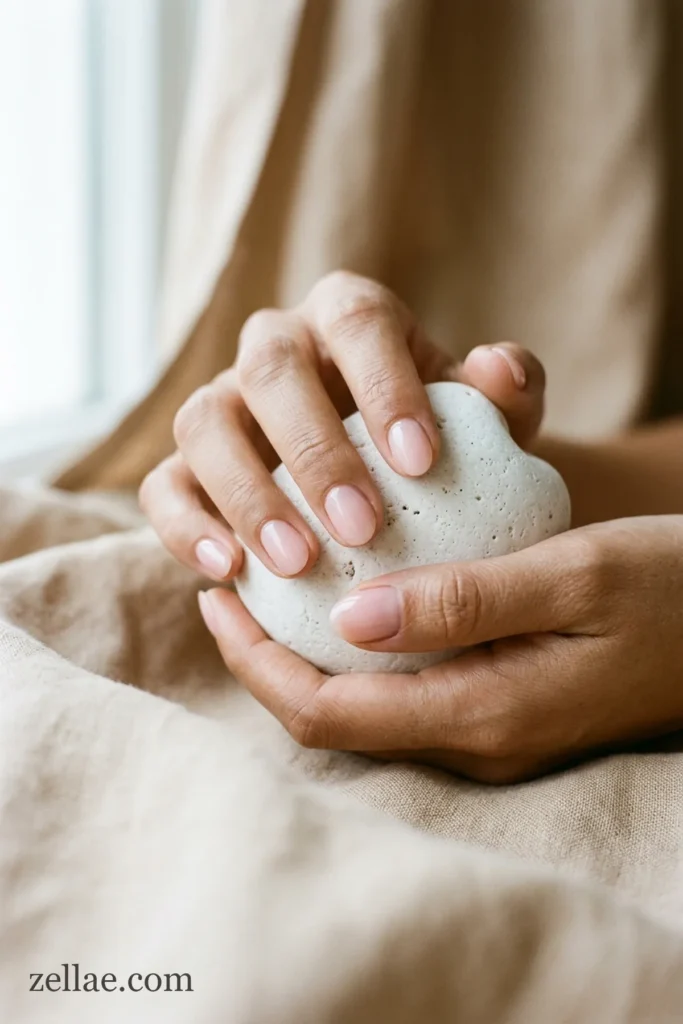
Before we get into salon scripts and monomer chemistry, here’s how BIAB and dip powder nails stack up side by side. Prices reflect standard mid-tier US salons in 2026 rather than bare-bones strip-mall deals or celebrity studio rates.
Notice how closely wear time overlaps on paper. The real difference isn’t day-one shine. It’s what happens at week three when your nails grow out and need maintenance.
| Factor | BIAB (Builder in a Bottle) | Dip Powder (SNS / Kiara Sky) | Editor Winner |
|---|---|---|---|
| Formula Type | Soft soak-off builder gel (oligomers + photoinitiators) | Cyanoacrylate glue resin + finely milled acrylic polymer powder | Tie (Depends on goal) |
| Natural Look & Thickness | Slim, glass-like, tapered cuticles with sculpted apex | Noticeably thicker, and it can feel bulky if not filed down carefully | BIAB |
| Average Wear Time | 3 to 4 weeks with minimal lifting when prepped cleanly | 3 to 4 weeks, with rock-hard protection against scratches and knocks | Tie |
| UV/LED Lamp Needed | Yes (60-second LED cures per layer) | No UV/LED lamp required (sets via liquid activator) | Dip Powder |
| Refill vs. Full Soak-Off | Rebalanced with infills every 3 weeks, with almost zero acetone exposure | Usually requires full 100% acetone soak-off every 3 to 4 weeks | BIAB |
| Salon Hygiene Risk | Low (brush-on bottle with fresh sanitized tools and clean prep) | Medium to High if salon dips fingers directly into shared jars | BIAB |
| Average Salon Cost | $65 to $95 full set, then $55 to $75 for 3-week infills | $50 to $70 fresh set plus $10 to $15 removal fee every visit | BIAB (long term) |
| Best Nail Type | Thin, peeling, bendy, or short nails trying to grow naturally | Sturdy nails, heavy hand labor, or UV-avoidant clients | Depends on lifestyle |
Look closely at rows five and six. If you wear nail enhancements back-to-back all year, skipping monthly acetone soaks is the biggest reason your natural plates stay strong with a BIAB manicure.
What's Actually on Your Nails? Builder Gel vs Dip Powder Chemistry
Understanding builder gel vs dip powder takes thirty seconds and saves you from pricey salon upsells. Neither formula is “organic” or “vitamin-infused,” no matter what the poster by the front desk claims. Both belong to the acrylic family, yet they flex in totally different ways.
BIAB stands for Builder in a Bottle. The GelBottle Inc. made the name famous (shades like Teddy and Dolly are salon icons), though top techs also swear by Kokoist Nail Thoughts, Luminary Nail Systems Multi-Flex Gel, and CND Plexigel. Picture a thicker, self-leveling soft gel that cures into a smooth, flexible cushion.
- How BIAB bonds: Your tech lightly removes shine, adds a bonding base if needed, and floats a bead of builder gel to create a subtle arch called an apex. Under a matched LED lamp, photoinitiators cure the gel into a resilient shield that gives slightly when you bang a car door.
- How dip powder sets: Popular lines like Kiara Sky, SNS Nails, OPI Powder Perfection, and Revel Nail skip the lamp completely. Your tech brushes on a cyanoacrylate resin base (chemically similar to medical-grade superglue), coats the wet nail in finely milled acrylic powder two to four times, and seals everything with a liquid activator that hardens on contact.
That flexibility gap explains almost every chipped or popped-off set you’ve ever had. Rigid dip powder fights any bend until it cracks or lifts off a soft nail in one whole sheet. Flexible builder gel absorbs everyday bumps instead of snapping away from your nail bed.
BIAB vs Dip Powder Nails: 7 Honest Salon Differences
On Instagram, fresh salon hands look nearly identical under a bright ring light. Real life is a different story. Once you’re opening soda cans, washing dishes, and typing eight hours a day, builder gel vs dip powder feels worlds apart by day twelve. Here’s what actually separates the two in the salon chair.
1. Natural Thickness & Apex Shaping
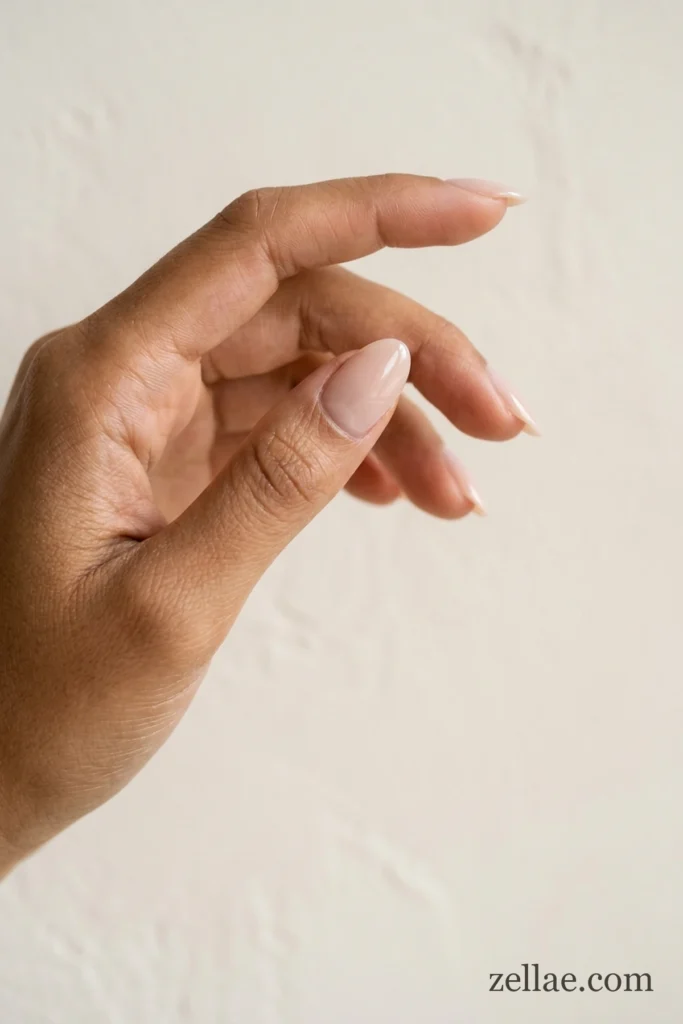
A great BIAB manicure looks just like naturally strong bare nails. Because builder gel self-levels before curing, a skilled tech tapers it paper-thin at your cuticle while building a smooth, supportive apex over the stress zone. Dip powder takes multiple glue-and-powder coats. Even with careful e-filing, dip usually sits thicker at the tip and leaves a sharper ridge as your nails grow out.
2. Wear Longevity & Chip Resistance
Both systems easily clear the 21-day mark with solid prep, yet they fail in opposite ways. Dip powder feels like hard porcelain, which pays off if you unpack boxes or knock your hands against hard counters all day. On bendy, peeling nails that normally pop rigid acrylic right off the tip, a BIAB manicure wins hands down. Because builder gel moves slightly with your keratin, corner lifting drops dramatically.
3. Salon Hygiene & Shared Dip Jars
Let’s talk about the elephant in the salon chair. Dip powder isn’t automatically unsanitary, yet dunking strangers’ fingers into one shared jar of Kiara Sky or SNS powder is a real hygiene risk. Cyanoacrylate glue doesn’t kill microbes, so moisture and bacteria can linger in communal jars. Brush-on BIAB stays cleaner by default when tools are disinfected. Only book dip if your tech pours powder over your nail.
4. UV Lamp Exposure & HEMA Allergy Risks
Dip powder’s biggest perk is zero UV or LED lamp time. That matters if you’re photosensitive, using retinoids, or just avoiding UVA on your hands. Still, dip isn’t reaction-free. Cyanoacrylate fumes trigger congested “dip flu” in plenty of clients. Builder gel carries a separate risk: acrylate or HEMA contact dermatitis if wet product touches your skin or under-cures in a mismatched lamp. Have reactive skin? Ask for certified HEMA-free BIAB.
5. Maintenance: Infills vs. Repeated Acetone Soaks
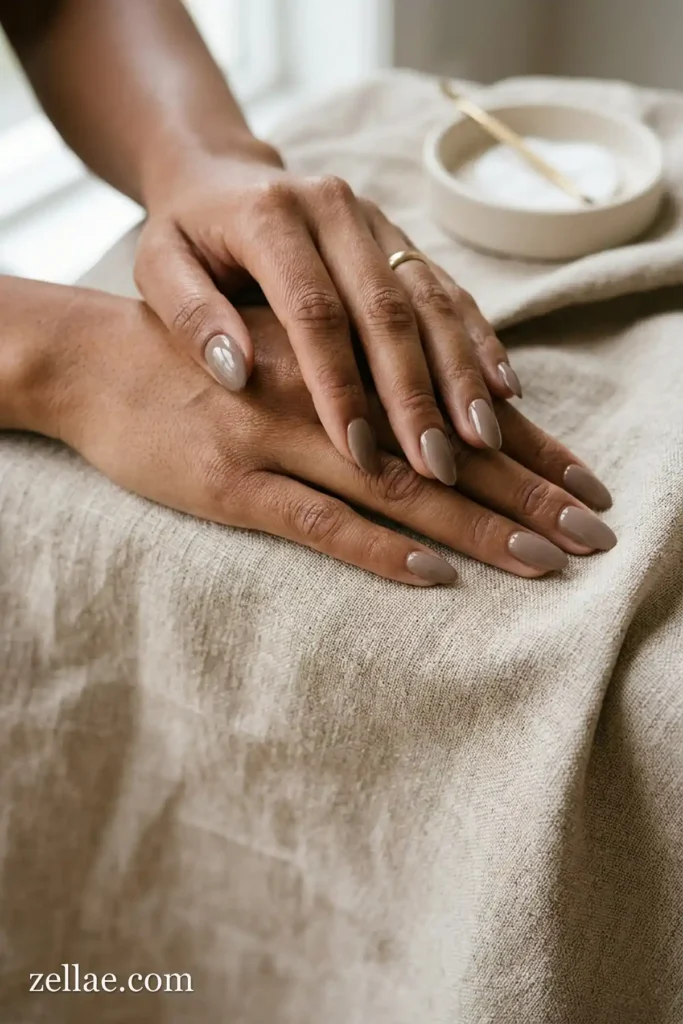
This is where BIAB and dip powder stop being close. At week three, your BIAB tech files off old color and roughly 80 percent of the gel, leaving a thin base layer before applying fresh product. Zero acetone needed. Most salons soak off every dip powder manicure in 100% acetone each visit. Twelve soaks a year parch your nails fast without daily cuticle oil for dry hangnails.
6. Real Cost Over 6 Months
On day one, dip looks cheaper at roughly $55 versus $80 for structured BIAB. Run the six-month math across eight visits, though, and the numbers flip. Most dip salons add $10 to $15 for every soak-off, pushing eight appointments to $520 to $640 before tip. Start with one $80 BIAB manicure, add seven infills at $60 to $70, and you’re around $500 to $570. Plus, you skip sitting wrapped in foil.
7. Nail Damage & Removal Reality
Neither formula ruins healthy keratin on its own. Rushed prep and impatient removal cause 90 percent of thin, stinging “rings of fire.” Still, builder gel vs dip powder carries very different wear-and-tear odds. Since BIAB stays on as a slim shield during infills, your bare nail only gets lightly prepped once at the new cuticle growth. With dip, heavy e-filing and monthly scraping make accidental over-filing far more likely.
Zoom out past appointment one, and the verdict gets crystal clear. Dip gives instant armor with zero lamp time, while a BIAB manicure quietly protects your natural nails month after month.
BIAB vs Dip Powder Nails: Which One Should You Book?
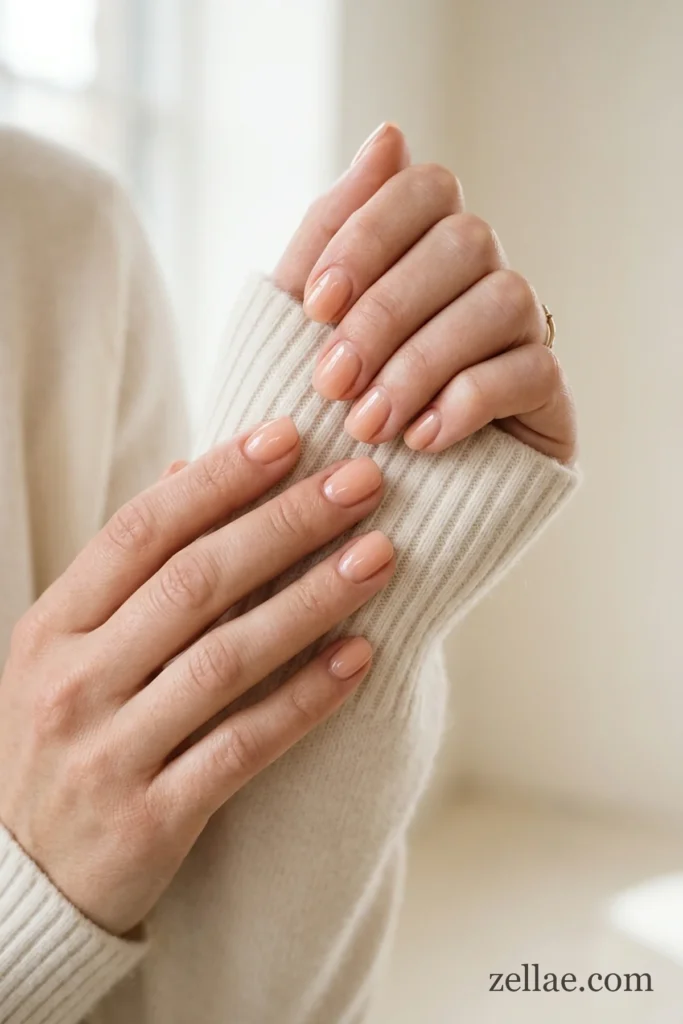
Forget what went viral on your feed last week and match the formula to how you actually use your hands. Two people sitting side by side at the same nail bar can legitimately need opposite services.
Use this quick lifestyle check to pick the winning formula for your next booking:
- Nurses, corporate typists, and busy moms: Book a BIAB manicure in a sheer nude or soft pink. Short, structured overlays won’t snag nitrile gloves, survive constant hand-sanitizer breaks better than rigid dip, and look tidy even at week three of grow-out.
- Chronic nail biters and peelers: Choose BIAB, especially a rubberized builder like Luminary or Kokoist Nail Thoughts. The smooth, rounded edge gives your teeth nothing to catch. Without a thick seam lifting near the cuticle, you’re far less tempted to pick.
- Brides and sheer-neutral minimalists: Go straight for BIAB. Translucent shades like The GelBottle BIAB 19 or milky blush overlays nail the glassy finish behind short milky white nails without turning chalky or opaque like layered dip powders often do.
- UV-avoidant clients and heavy-impact hands: Pick a dip powder manicure, with one non-negotiable rule. If you skip LED lamps for medical reasons or haul luggage, retail boxes, and garden tools all week, opaque dip delivers serious scratch resistance. Just make sure your salon pours the powder over your nail.
Still on the fence? Try one three-week cycle of sheer BIAB first. Most longtime dip fans who test it once rarely switch back after experiencing how weightless structured gel feels on real nails.
5 Questions to Ask Your Nail Tech Before Booking
A mediocre tech can ruin your nail plates with the most expensive builder gel on earth, while a meticulous pro can make dip powder look sleek and hygienic. Copy these five questions straight into your salon DM or booking note before putting down a deposit.
- “Do you use the pour-over method or single-use cups for dip powder?” If every client dips straight into the manufacturer jar, politely pass. Pouring powder over your nail with a clean scoop (or decanting a teaspoon into a disposable paper liner) eliminates shared-jar cross-contamination.
- “Which BIAB brand do you stock, and do you carry a HEMA-free formula?” Legitimate structured-gel specialists happily name brands like The GelBottle BIAB, Kokoist, Bio Sculpture, or Luminary. Hesitation or unbranded bottles from random online marketplaces are an instant red flag for allergy risk.
- “Do you rebalance BIAB with an infill, or soak everything off each visit?” You want a tech who infills cleanly by leaving a thin protective base layer. Salons that force a full acetone soak-off every three weeks wipe out the biggest nail-health advantage of a BIAB manicure.
- “Does your LED lamp match the exact builder gel system you use?” Builder gels need specific wavelengths and wattages to cure all the way through. Thick BIAB placed under a weak universal lamp can stay uncured underneath, which is the top trigger for sudden gel allergies.
- “How do you remove old dip or BIAB without thinning the natural plate?” Listen for gentle hand-filing or low-RPM e-filing of the top layer, warm foil wraps, and wooden orangewood sticks. If anyone mentions prying lifted edges off with a plastic nail tip, walk out.
Good nail techs love educated clients who care about plate health. If a salon brushes off basic sanitation or brand questions, treat that attitude as your cue to book elsewhere.
6 Pro Nail Care Tips to Make Either Manicure Last 4 Weeks
Even a $95 salon set will lift by day ten if you treat your tips like pry bars or soak them in steaming water every night. Follow these six simple habits to keep builder gel or dip powder looking fresh for a full month.
- Apply broad-spectrum SPF 30+ before any BIAB appointment: Before stepping under an LED curing lamp, smooth water-resistant sunscreen across the backs of your hands (wiping your nail plates dry first) or slip on fingerless UPF gloves, following the American Academy of Dermatology’s gel manicure safety guidelines.
- Oil your cuticles twice a day, every day: Jojoba-based oils like CND SolarOil or Bliss Kiss sink right around the cuticle seal. They keep natural keratin supple so it won’t dry out, shrink away from your dip or builder gel, and cause early corner lifting.
- Protect your set during hot showers and dishwashing: Nail plates swell like sponges in long, steamy water, then shrink back down as they dry and pull away from your overlay. Slip on dish gloves for chores and lock in moisture afterward during your everything shower routine.
- Never let anyone aggressively cut living cuticles: Gentle dry-manicure cleanup of dead skin on the nail plate is fine, but snipping live fold tissue invites painful redness and infections. That’s a core warning in the American Academy of Dermatology’s healthy nail tips.
- Skip “popping off” a lifted edge at home: Pulling off one loose corner of dip powder or BIAB rips away up to thirty microscopic keratin layers underneath. File any snagged edge smooth with a 180-grit board and book a single-nail repair instead.
- Keep appointments on a 3-to-4-week clock: Past week four, your sculpted apex grows too far forward toward the tip, turning your nail into a tiny seesaw. One clumsy reach for a car handle can snap the natural nail bed underneath, especially with rigid dip.
Frequently Asked Questions
Can you switch directly from dip powder to BIAB nails?
Yes, and you don’t need a months-long “breathing” break (nails are dead keratin, so they don’t breathe). Your tech will soak off the old dip powder manicure completely, check for thin spots, lightly dehydrate the plate, and apply a slim BIAB manicure right away. If your nails feel tender or papery from past filing, keep that first set super short while fresh growth catches up.
Does a BIAB manicure actually help natural nails grow?
BIAB won’t speed up biological growth from the nail matrix. Only genetics, nutrition, and circulation do that. What a BIAB manicure genuinely does is stop tip breakage and peeling, so you keep the length your body already grows. Most clients who never got past their fingertips in regular polish reach neat medium-short length within two to three infill cycles.
Is pour-over dip powder actually hygienic?
Yes, as long as your tech follows the process strictly. With the pour-over method, they hold your glued nail over a clean tray and spoon powder gently over the top (or scoop a single-use portion into a disposable paper liner and toss the leftovers). Because your fingers never touch the master jar, pour-over dip solves the shared-jar hygiene problem cleanly.
Are there reliable HEMA-free BIAB options for sensitive skin?
Absolutely. If standard gels make your fingertips itchy, tight, or blistered, ask specifically for a verified HEMA-free builder gel such as The GelBottle HEMA-Free BIAB, Bio Sculpture, or Light Elegance JimmyGel (which is both HEMA-monomer-free and TPO-free). Always confirm your tech pairs the formula with its manufacturer-matched LED lamp and keeps uncured gel completely off your surrounding skin.
How often should you infill BIAB vs getting a fresh dip powder set?
Plan on rebalancing a BIAB manicure every three weeks, or four weeks tops if your nails grow slowly. Staying on schedule keeps the apex centered over your nail’s stress point so nothing snaps. A dip powder manicure also holds up for three to four weeks, though most salons recommend a full acetone soak-off and fresh set rather than filling over old resin.
When you compare BIAB vs dip powder nails honestly, a BIAB manicure comes out ahead for most people. You get a slimmer natural look, cleaner salon hygiene, and far less acetone wear over a full year. Keep dip in mind only if you skip UV lamps completely and trust your salon’s pour-over setup. Ready to get your plates back in top shape? Browse our nail recovery guide next.