Spend five minutes on TikTok and you’d swear soaking your roots in rosemary oil overnight will give you waist-length hair by next Tuesday. The truth is quieter and far kinder to your follicles. Done right, a lightweight scalp oiling routine softens dry skin, curbs mid-length breakage, and makes weekly wash days gentler across your whole hair care routine.
Copy the viral version by coating unwashed roots in heavy castor oil before bed, and you’re asking for greasy flakes, tender bumps, and scary shower drain clumps. I’ve spent months testing lightweight pre-wash scalp oils, digging into trichology studies, and figuring out how this step fits inside an everything shower routine order without flattening fine roots.
Below, we’re separating peer-reviewed hair science from social media hype. You’ll see what hair oiling for growth can realistically do, which formulas match your scalp type, and when to skip oil completely.
The Editor’s Quick Verdict: Scalp oiling won’t reverse medical hair loss, yet gentle fingertip massage paired with a lightweight, diluted pre-wash scalp oil (like rosemary-infused jojoba or squalane) keeps your scalp calmer and cuts wash-day breakage. Use 1–2 droppers max, massage for 4–5 minutes, wait 30–60 minutes (never overnight), and double-shampoo thoroughly. Have an oily or flaky scalp? Switch to a water-based peptide serum instead.
Jump to a section: The Real Science · Best Oils Table · 6-Step Routine · Who Should Skip · Results Timeline · Derm Tips · FAQs
What Scalp Oiling Actually Does (And What TikTok Gets Wrong)
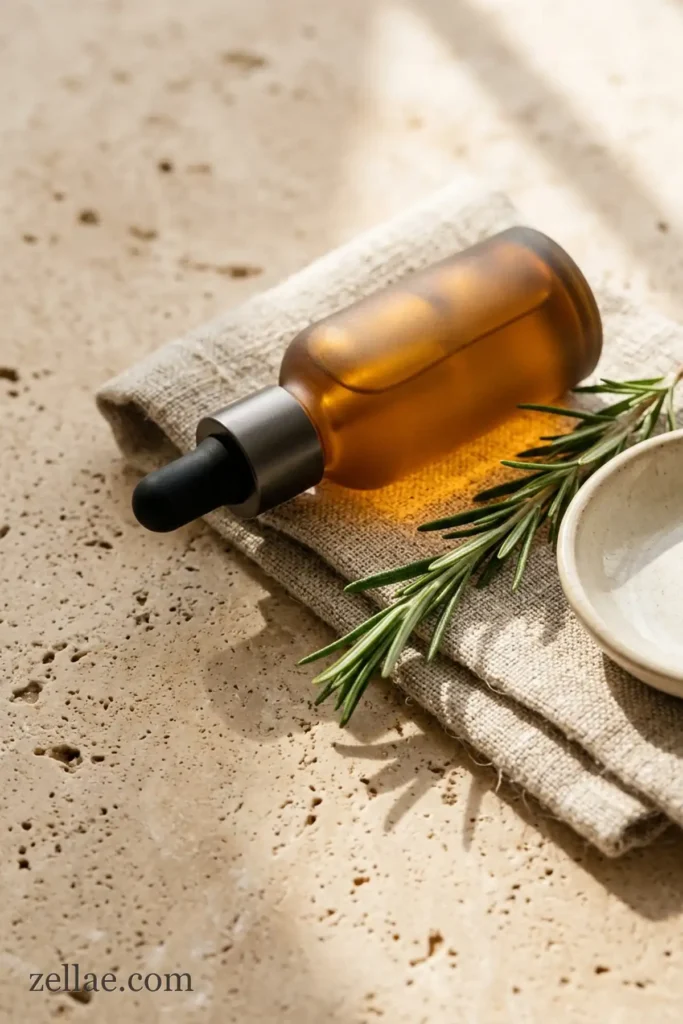
Traditional South Asian hair oiling (champi) has existed for centuries as a grounding massage and conditioning ritual. Crucially, it was always followed by a thorough wash, never layered over four days of dry shampoo. Short-form video stripped away that nuance and sold oiling as a fast fix for widening parts.
Here’s what the clinical data actually says. A widely cited 2015 randomized trial in Skinmed tested rosemary oil lotion against 2% minoxidil in 100 men over six months. Both groups saw modest, similar gains in hair count at month six, with less itching from rosemary. Neither group saw results by month three, however. The study also skipped a placebo arm, and dermatologists usually prescribe stronger 5% minoxidil.
Physical touch carries real weight, too. A small 2016 ePlasty study found that four minutes of daily scalp massage over 24 weeks increased hair shaft thickness by gently stretching dermal papilla cells. Add a penetrating carrier oil before you shower, and a 2003 Journal of Cosmetic Science study shows you also reduce cuticle swelling and protein loss (hygral fatigue) during washing.
- TikTok Myth #1: Oil wakes up dead follicles. Even the cleanest scalp oiling routine can’t override androgenetic alopecia, thyroid shifts, iron deficiency, or postpartum shedding. Medical hair loss calls for a board-certified dermatologist and clinically proven treatments.
- TikTok Myth #2: Overnight soaking doubles results. Leaving heavy oil pressed against warm skin for eight hours traps oxidized sebum, sweat, and dead skin cells. On oily or flaky scalps, that overnight seal feeds Malassezia yeast and triggers extra shedding.
- TikTok Myth #3: Syrupy castor oil grows thicker hair. Castor oil’s ricinoleic acid feels lush, yet zero human clinical trials show it speeds up growth. Its sticky drag actually pulls on fragile strands during application unless you dilute it heavily.
- TikTok Myth #4: Undiluted essential oils work faster. Putting straight rosemary, peppermint, or tea tree essential oil directly on your scalp can cause chemical irritation and contact dermatitis. Both spark inflammatory hair fall fast.
Think of oiling as smart scalp comfort, steady massage circulation, and physical strand protection. Once you treat it as a targeted pre-wash treatment instead of leave-in hair fertilizer, picking the right bottle gets way simpler.
Best Scalp Oils by Hair & Scalp Type
Most oiling disasters start the same way: someone with fine, oily roots buys a thick castor blend built for coarse, parched coils. Skip copying your favorite creator’s exact bottle. Match your pre-wash oil to how fast your scalp gets greasy and how heavy the formula actually is.
If you want fuller-feeling hair without limp roots, the oil chemistry matters. Liquid wax esters, sugarcane squalane, and oil-free peptide serums behave nothing like heavy kitchen triglycerides once they hit warm skin.
| Oil / Formula Type | Molecular Weight | Best Hair & Scalp Match | Real Product Example | Honest Caveat |
|---|---|---|---|---|
| Lightweight Rosemary Blend | Low to medium (grapeseed, rice bran & sweet almond) | Fine-to-medium strands with normal-to-dry, non-flaky scalps | Mielle Rosemary Mint Light (~$10 / 2 oz) | Still carries peppermint & rosemary essential oils that sting sensitive skin |
| Botanical Pre-Wash Blend | Medium (castor, bisabolol, rosemary & tea tree) | Medium-to-thick hair with occasional tight, dry roots | Briogeo Scalp Revival Rosemary Pre-Wash (~$32 / 1.7 oz) | Pricey per ounce, and the castor base needs a thorough double shampoo |
| Pure Cold-Pressed Jojoba | Very low (liquid wax ester mimicking human sebum) | Fragrance-sensitive, balanced, or mildly dry scalps | Cliganic or NOW Organic Jojoba Oil (~$12 / 4 oz) | No built-in rosemary actives unless you carefully dilute to 1–2% max |
| 100% Plant Squalane | Ultra-low (fully saturated dry-touch hydrocarbon) | Fine, easily weighed-down hair and mildly flake-prone roots | The Ordinary or Biossance Squalane (~$11–$34) | Great fungal-safe massage slip, though too sheer for very parched ends |
| Coconut + Castor Blend | Mixed (penetrating lauric acid + viscous ricinoleic) | Coarse, high-porosity, tightly coiled (4A–4C) lengths | Unrefined coconut diluted 3:1 with cold-pressed castor (~$12) | Feeds Malassezia yeast and feels far too sticky for fine roots |
| Water-Based Peptide Serum | Weightless (oil-free water, peptides & caffeine) | Oily roots, seborrheic dermatitis, fine limp hair | The Ordinary Multi-Peptide Serum (~$23 / 2 oz) | Not an oil, so it won’t cushion rough ends against wash-day hygral fatigue |
Ever wonder why pure jojoba shows up in both scalp care and our fast-absorbing jojoba cuticle oils guide? Chemically, it’s a liquid wax ester closely mirroring human sebum, which makes it a clean-rinsing pre-wash scalp oil with zero heavy film.
Prefer mixing your own blend at home? Stick strictly to a 1% to 2% dilution: 6 to 12 drops of steam-distilled rosemary essential oil per fluid ounce (30 ml) of jojoba or squalane. Store the bottle in dark amber glass away from shower steam, and resist eyeballing extra drops.
The 6-Step Scalp Oiling Routine That Won't Clog Follicles
A solid routine takes about ten minutes of hands-on effort before your weekly wash. Forget the all-night marathon in a greasy towel. Follow these six steps in order so every drop calms your scalp barrier and rinses out with airy root lift.
1. Detangle Dry Hair & Part Into 4 Clean Sections
Start on dry hair before a single drop hits your head. Work a wide-tooth comb or flexible brush gently from your ends upward to clear shed strands and leftover dry shampoo, which stops knots once oil enters the mix. Section your hair into four quadrants with claw clips so the oil actually reaches your scalp instead of coating the top layer.
2. Use 1–2 Droppers Max (Never Drench Your Roots)
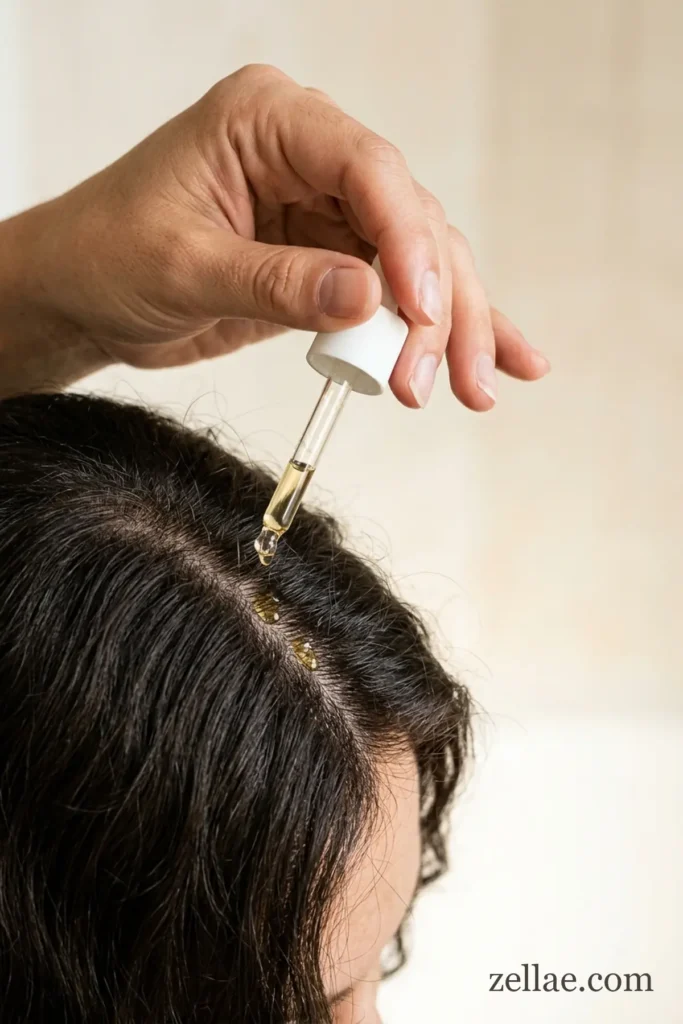
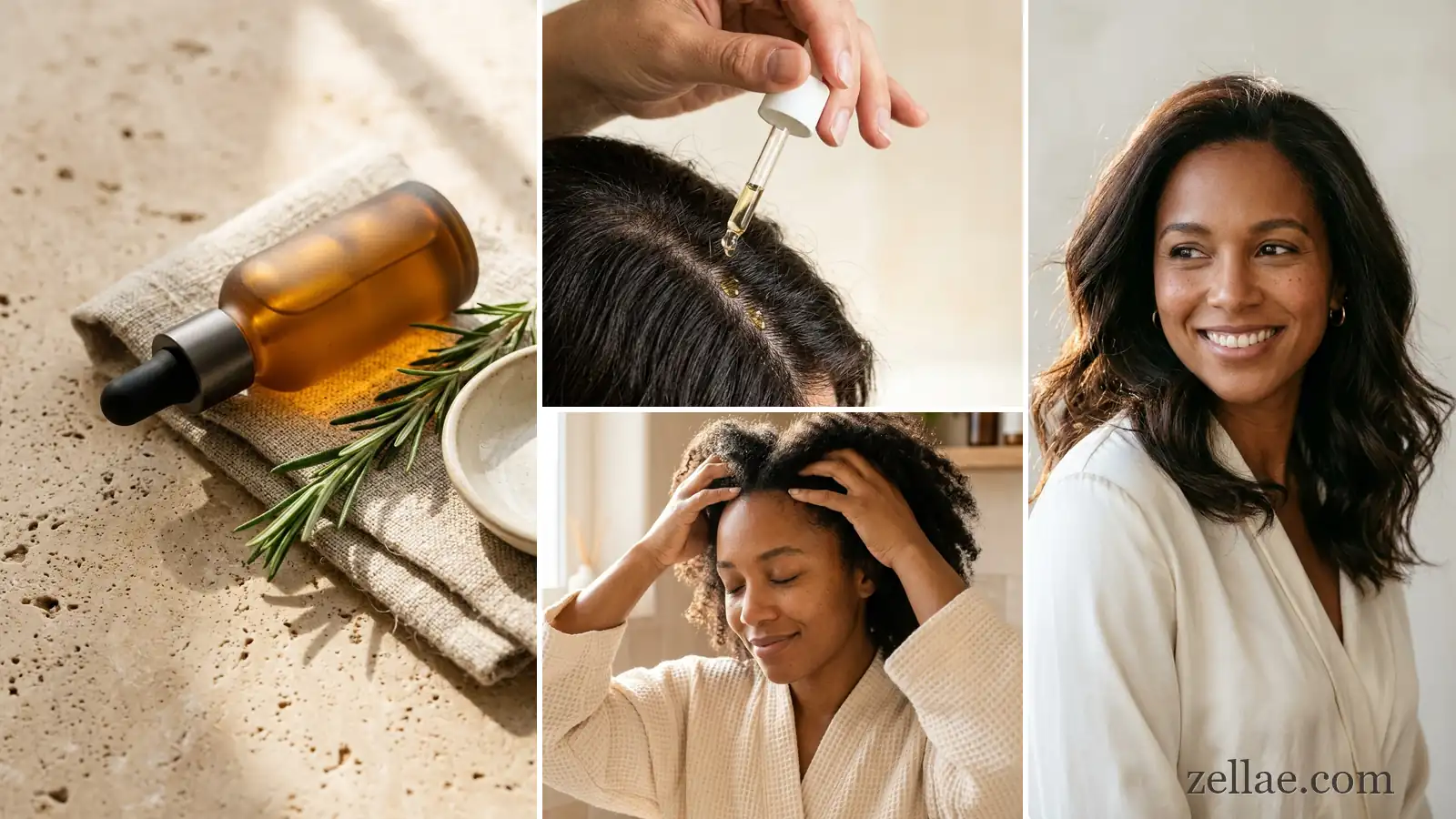
More oil won’t make hair grow faster. It just forces harsh scrubbing later. Measure one full dropper for fine or thin hair, and cap out at two droppers for thick, dense hair. Hover the pipette slightly above your part without scraping skin, tapping three or four tiny beads per row. If oil drips down your temples, you used way too much.
3. Massage With Fingertip Pads for 4–5 Minutes

This step delivers almost all the real payoff behind a rosemary oil scalp massage. Press soft fingertip pads (never your fingernails) onto your scalp and shift the skin gently in slow circular pulses for four to five minutes. Work from your nape and behind your ears up toward your crown. Skip stiff silicone scrubbers on fine hair, since aggressive rubbing snaps delicate roots.
4. Protect Dry Ends Separately
Your roots and your ends have completely different needs. Once your massage wraps up, smooth two or three drops of coconut, argan, or squalane strictly from your ears down to shield porous tips from shower water swelling. Keep richer oils well away from your crown, and finish with a lightweight heat protectant for fine hair before any blow-dry.
5. Wait 30–60 Minutes and Skip Overnight Oiling
Twist your hair up loosely with a claw clip, avoiding tight slicked buns that pull on your hairline, and set a timer for 30 to 60 minutes. That window gives the oil plenty of time to soften dry skin and buffer cuticles without suffocating follicles. Skipping overnight oiling also saves your silk or satin pillowcase from yellow stains and keeps temple pores clear.
6. Emulsify and Double-Shampoo Cleanly
Never squirt shampoo straight onto dry, oiled roots, because it won’t spread evenly. Stand under warm (never scalding) water for a full minute first to loosen the oil. Massage a gentle clarifying cleanser into your scalp (expect light foam on round one), then rinse well. Wash your roots a second time until a brisk lather builds, and condition only from your mid-lengths down.
Do a quick touch check once you’re towel-dried: after a clean wash-out, your roots should feel airy and fresh, never slick. If your crown dries piecey, cut your oil dose in half next week or start wash day with a chelating cleanser like Ouai Detox Shampoo.
Who Should Skip Scalp Oiling Completely (Seborrheic Dermatitis & Fine Oily Scalps)

Here’s the permission slip TikTok never hands out: you don’t need scalp oil to grow strong, healthy hair. Plenty of people have naturally oil-prone roots or sensitive scalps where extra topical oil sparks way more shedding and irritation than shine.
If you deal with dandruff or seborrheic dermatitis, those flakes come from an inflammatory reaction to Malassezia yeast feeding on oleic-acid-rich oils, rather than simple dry skin. Pouring coconut, olive, almond, or castor oil onto a flare serves dinner straight to that yeast, ramping up redness, stubborn itching, and reactive shedding.
The smarter swap? Reach for a weightless, water-based serum like The Ordinary Multi-Peptide Serum for Hair Density (~$23) or Vegamour GRO, paired with dry fingertip massage. You get the same circulation boost with zero yeast-feeding lipids, plus easy root lift alongside low-maintenance haircuts for fine hair.
- Active dandruff, seborrheic dermatitis, or scalp psoriasis: Skip plant oils on your roots altogether until a dermatologist-recommended medicated wash calms the flare.
- Scalp folliculitis or hairline acne: Tender, pimple-like bumps around your crown or nape point to clogged, inflamed pores. Heavy pre-wash oils only fuel breakouts faster.
- Very fine, low-density oily roots: If your scalp turns slick within 24 hours of washing, skip root oiling and apply oil strictly from your ears down to protect dry ends.
- Sudden, heavy diffuse shedding: Rapidly widening parts or fistfuls of hair after illness, major stress, or childbirth point to internal triggers like iron, thyroid, or hormone shifts. Those need real lab work instead of rosemary oil.
How Long Until You Notice Less Breakage or Baby Hairs?
Reset your calendar before buying your first dropper. Scalp hair grows roughly half an inch (1.25 cm) a month, and follicles cycle slowly between resting and growing phases. Any video promising dramatic temple regrowth after two weeks of oil is just playing with parting angles and ring lights.
Stick to a realistic weekly scalp oiling routine alongside gentle detangling and solid nutrition, and here’s the honest timeline most people experience.
- Weeks 1–2 (Immediate Texture Shift): Expect softer mid-lengths, easier wet detangling, and calmer post-wash frizz. That early boost comes straight from pre-wash lipid protection and thorough double cleansing.
- Weeks 4–8 (Less Snapping & Breakage): You should notice fewer short, snapped tips on your bathroom floor and brush. For dry, brittle hair, cutting breakage is the biggest real-world win you’ll see from consistent oiling.
- Months 3–6 (Early Density Check): Consistent rosemary oil scalp massage takes four to six months to show subtle fine baby hairs along your temples or slightly fuller-feeling strands, matching clinical timelines.
- Month 6+ (Time to Reassess): If thinning keeps progressing or your part keeps widening after six steady months, pause the DIY oil experiments. Book a dermatologist for ferritin, vitamin D, and thyroid labs alongside proven medical treatments.
Stop counting every loose hair in your brush each Sunday. Snap one overhead photo of your center part in the exact same bathroom lighting on Day 1, Day 90, and Day 180. Consistent light tells the truth far better than memory ever will.
6 Dermatologist-Informed Tips for a Safer Scalp Oiling Routine
Small habits separate bouncy, clean roots from itchy buildup and frustration on wash day. Keep these six dermatologist-backed ground rules handy before you reach for the dropper.
- Patch-test every botanical blend for 24 hours: Dab one drop behind your ear or inside your wrist before coating your crown. Rosemary, peppermint, and eucalyptus cause a cooling tingle people mistake for “working,” when it can actually signal early allergic contact dermatitis.
- Respect the 1%–2% essential oil cap: Blending your own pre-wash scalp oil at home? Never go past 6 to 12 drops of rosemary essential oil per 1 ounce (30 ml) of jojoba or squalane carrier oil, or you risk chemical scalp irritation.
- Stick to lukewarm water and gentle towel drying: Hot water swells hair cuticles and strips natural scalp lipids. Pair your double wash with soft root lathering and low-friction drying straight from the American Academy of Dermatology’s healthy hair tips.
- Treat flakes medically instead of greasing them down: If itching, redness, or sticky yellow scales show up, pause oiling right away. Rotate a zinc pyrithione, selenium sulfide, or ketoconazole shampoo using the AAD’s dermatologist guidance on treating dandruff.
- Keep oiling to once weekly for most hair types: Oiling three or four times a week forces frequent clarifying washes that rough up delicate ends. One focused weekly session protects your lengths while keeping your scalp microbiome calm.
- Skip tight slick-back buns during your wait window: Pulling oiled hair into a stretched high bun yanks fragile frontal follicles and invites traction alopecia over time. Clip your hair loosely at your nape until you hop in the shower.
Frequently Asked Questions
Can you sleep with oil on your scalp overnight?
For most people, no. Trapping oil against warm skin for eight hours mixes with sweat and natural sebum, feeds Malassezia yeast, and triggers itchy flakes or tender folliculitis bumps. Waiting 30 to 60 minutes gives your scalp and hair every softening and massage benefit without overnight irritation or ruined pillowcases.
Why does more hair fall out while oiling my scalp?
Seeing extra strands slip out during a scalp massage looks scary, yet it’s usually just the physical release of resting (telogen) hairs already detached and ready to shed within 48 hours. Losing 50 to 100 hairs a day is completely normal. If heavy shedding lasts past three weeks, or comes with burning and redness, stop oiling right away.
Is rosemary oil really as effective as minoxidil for hair growth?
Not quite. The famous 2015 trial pitted rosemary oil against 2% minoxidil, rather than the stronger 5% formula dermatologists typically prescribe, in a small group of 100 men with no placebo arm. Think of a diluted rosemary oil scalp massage as soothing cosmetic support, while FDA-approved minoxidil remains the proven medical treatment for pattern thinning.
How often should you do a scalp oiling routine each week?
Once a week right before your main wash day works best for fine, medium, and balanced scalps. If you have coarse, tightly coiled hair and a naturally dry scalp, twice a week usually feels great. Just make sure every wash rinses cleanly with zero waxy roots, itchiness, or crown buildup.
How do you wash scalp oil out completely without stripping dry ends?
Soak your hair under warm water for a full minute before rinsing out any pre-wash scalp oil. Massage a gentle clarifying shampoo strictly onto your scalp to break down the lipids, rinse thoroughly, and repeat a second root wash until clean suds build. Let the soapy water glide down your lengths on its own, then condition richly from your ears down.
Hair oiling for growth pays off most when you ditch overnight extremes and treat your scalp like skincare: a lightweight diluted oil, five calm minutes with your fingertips, a 30-minute timer, and a clean double shampoo. Ready for more wash-day picks, flattering cuts, and gentle styling? Explore our full collection of hair care guides.