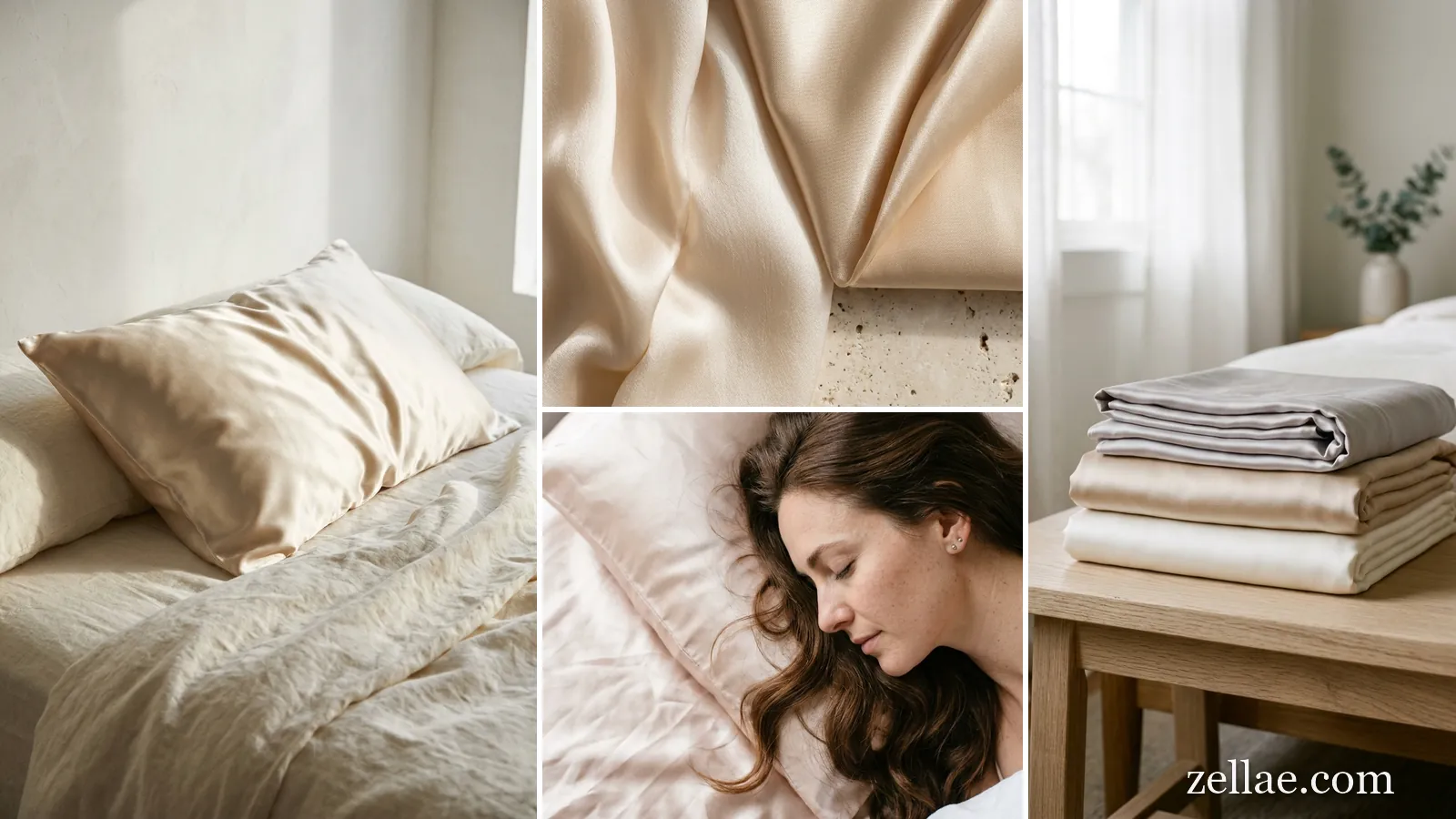
If you’ve ever stared at an $89 Slip box next to a $12 Bedsure two-pack wondering if the silk vs satin pillowcase debate is mostly hype, let’s clear up the biggest label myth right away. Silk is a natural protein fiber spun by silkworms. Satin is just a weave, and almost every cheap “satin” case is 100% polyester.
Luxury mulberry silk pillowcases actually use real silk fibers woven in a smooth charmeuse satin weave. That single textile difference changes everything from winter hair static to how clammy your neck feels at 3 a.m. After testing bedding fabrics alongside our hair care guides and everyday heat protectants for fine hair, I realized price alone never tells the full story.
You don’t always need to drop $90 to wake up with calmer curls or fewer snapped ends. Ahead, we put mulberry silk and polyester satin through seven real bedroom tests (covering frizz, heat, breakouts, momme weight, laundry durability, and cost per night) so you only buy once.
The Editor’s Quick Verdict: Want smoother, lower-friction hair on a $15 budget? A solid polyester satin pillowcase from Kitsch or Bedsure genuinely cuts morning frizz and tangles. If you sleep hot, sweat at night, break out easily, or want breathable softness that lasts three years, 22-momme Grade 6A mulberry silk from Quince ($45 to $50), Brooklinen ($65), or Slip ($89) wins easily.
Jump to a section: Quick Compare · 7 Honest Differences · Spot Fake Silk · Washing Guide · Pro & DIY Tips · FAQs
Silk vs Satin Pillowcase Compared: Mulberry Silk vs. Polyester Satin
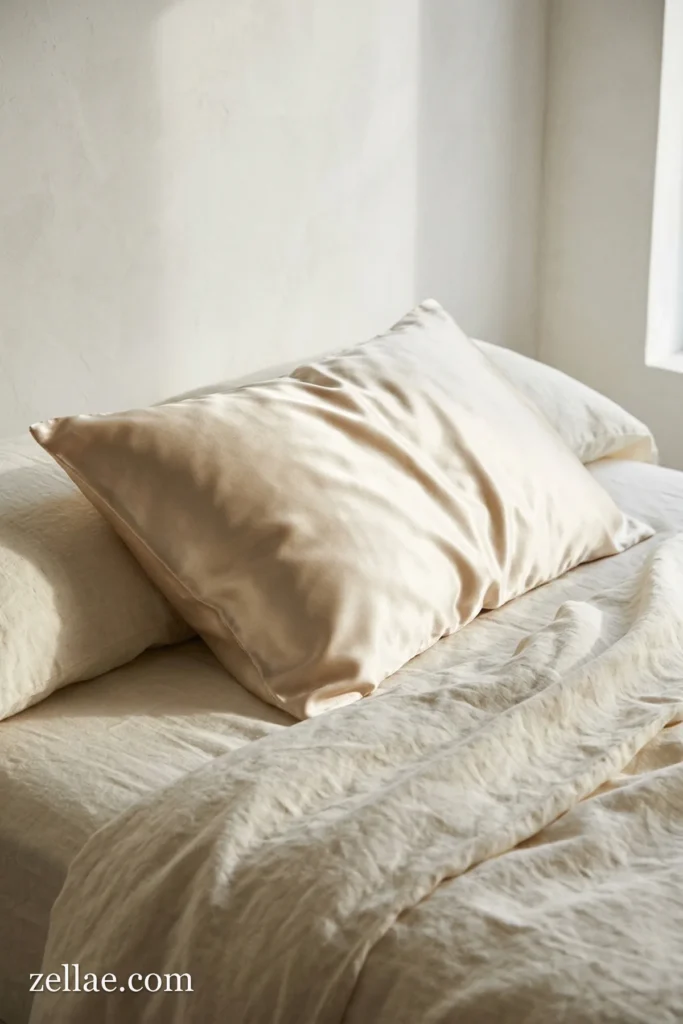
Both fabrics beat standard 300-thread-count cotton percale by a mile. Cotton’s rough, twisted cellulose yarns catch raised hair cuticles like soft Velcro while you toss and turn. Where real silk and polyester satin split is how each fiber handles body heat, humidity, winter static, and fifty rounds in your washer.
Here’s how genuine 22-momme mulberry silk stacks up against 100% polyester satin across eight everyday bedroom tests.
| Test Category | 22-Momme Grade 6A Mulberry Silk | 100% Polyester Satin | Editor Pick |
|---|---|---|---|
| Material | Natural protein fiber (Bombyx mori silk) in a charmeuse satin weave | Synthetic petroleum-based polyester filament in a glossy satin weave | Mulberry Silk |
| Friction & Frizz Reduction | Ultra-low friction with zero winter static, keeping cuticles flat and shiny | Very low friction for curls and waves, though dry air can spark static | Tie (Silk edges dry climates) |
| Breathability & Heat | Naturally thermoregulating. Stays cool and vents trapped humidity | Traps body heat and sweat, which can feel clammy for warm sleepers | Mulberry Silk |
| Skincare Moisture Absorption | Low absorption (~11% regain). Keeps night creams on your face without pooling sweat | Hydrophobic (~0.4% regain). Won’t drink serums, but traps oil and sweat on top | Mulberry Silk |
| Machine Wash Ease | Needs cold gentle wash, a mesh bag, enzyme-free detergent, and air drying | Toss in cold water with regular detergent. Low-heat drying is usually fine | Polyester Satin |
| Real Lifespan | 3 to 5 years at 22 momme if air-dried and kept away from sharp snags | 1 to 2 years before seam pilling, pulled loops, or dull flattened spots | Mulberry Silk |
| Real Price Range | $45 to $50 (Quince) up to $65 to $99 (Brooklinen, Slip, Blissy) | $10 to $14 for a two-pack (Bedsure) up to $19 single (Kitsch) | Polyester Satin |
| Top Brand Picks | Slip Pure Silk, Quince 22-Momme, Brooklinen Mulberry Silk, Blissy | Kitsch Satin Pillowcase, Bedsure Satin Pillowcase | Depends on budget |
Pay close attention to breathability and laundry care before pulling out your card. Picking the best pillowcase for hair goes far beyond day-one slip. If you hate air-drying delicates, an $89 mulberry silk pillowcase can lose its glow inside three months unless you stick to simple cold-wash habits.
On the flip side, if you wake up sweaty every summer, saving $35 on synthetic polyester satin won’t feel like a bargain at 2 a.m.
Silk vs Satin Pillowcase: 7 Honest Differences That Show Up Overnight
Under bright studio lights on a product page, mulberry silk and polyester satin look nearly identical. Give it two weeks. After three washes, one humid night, and your full bedtime hair routine, the differences stop being subtle. Here are the seven real tests that settle the debate for both hair and skin.
1. Fiber vs. Weave: What Labels Actually Mean
This one label mix-up causes most of the confusion when shopping online. Silk names the raw fiber, a continuous natural protein filament spun by mulberry-fed silkworms. Satin only names the weaving pattern, where threads float over four or five yarns to create a glassy face. Most budget “satin” cases are 100% polyester. True Grade 6A mulberry silk gives you both: real silk woven into a luminous charmeuse satin finish.
2. Morning Frizz & Breakage on Curly, Wavy, and Fine Hair
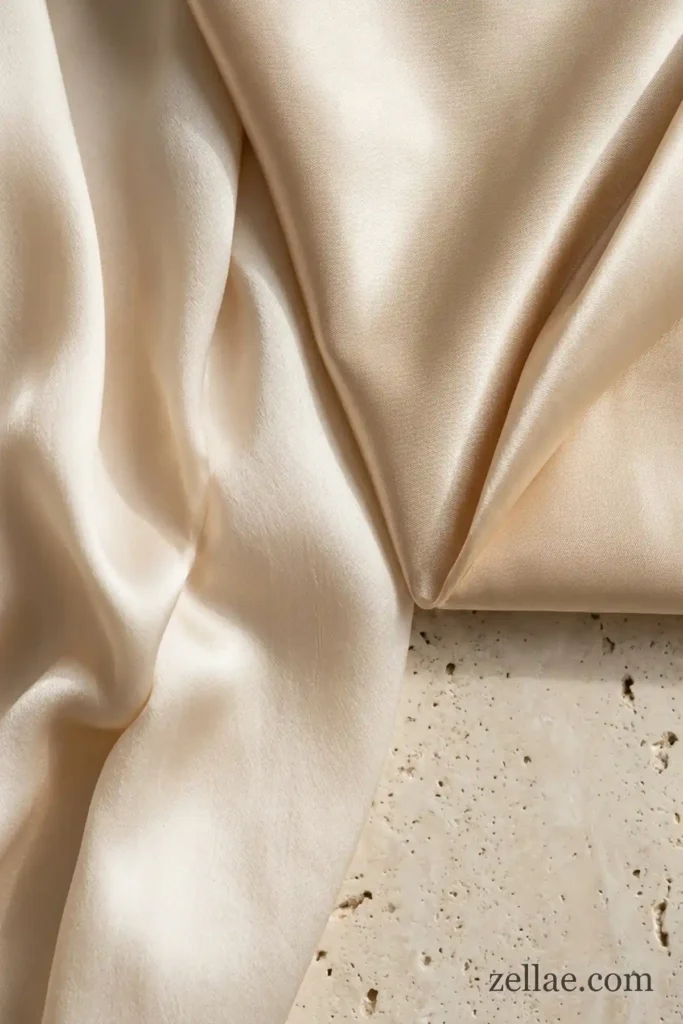
Both fabrics dramatically cut overnight cuticle drag compared to cotton, which helps protect curls, fresh blowouts, and low-maintenance haircuts for fine hair. Static electricity is where the two really split. In dry, heated winter bedrooms, synthetic polyester builds an electrostatic charge that makes fine strands float and halo by morning. Genuine mulberry silk stays naturally anti-static, keeping glossy waves and 3C to 4C coils smooth with far fewer flyaways.
3. Sleeping Temperature & Night Sweats
Flip your pillow hunting for a cool spot at 2 a.m.? Polyester satin will test your patience fast. Synthetic filaments barely breathe, trapping neck heat and sweat right against your cheek and hairline. Mulberry silk is a hollow-core protein fiber that adapts to skin temperature and lets moisture vapor escape. For hot sleepers, humid summers, or night sweats, real silk wins without breaking a sweat.
4. Breakout & Skincare Absorption Reality
Neither fabric cures hormonal acne, though fiber chemistry matters if you layer rich barrier creams or rely on a hydrating dry-skin morning glow routine. Cotton drinks pricey serums fast. Polyester satin repels moisture completely, leaving heavy oils and sweat sitting right on your pores unless you wash it every three days. Real mulberry silk hits a smart middle ground, protecting skincare while letting skin breathe.
5. Understanding Momme Weight: 19 vs. 22 vs. 30 Momme

Polyester satin doesn’t use momme at all. Brands list GSM or skip the spec. With real silk, momme measures fabric weight in pounds per 45-by-100-yard roll. Nineteen momme feels airy, though it thins faster after weekly washes. Twenty-two momme hits the sweet spot: substantial, durable, and cool year-round. Thirty momme feels ultra-plush and lasts longest, yet costs $100+ and can sleep warm in July.
6. Washing, Snagging, and Real Durability Over 12 Months
Here’s where budget satin earns real respect. Toss a $19 Kitsch or $12 Bedsure case into cold laundry, skip softener, and it handles busy weeks without fuss. Cheap polyester still ages faster, often pilling at the seams or snagging into shiny pulled threads within two years. Mulberry silk needs cold gentle washes, a mesh bag, enzyme-free detergent, and air drying. Care for it right, and 22-momme silk outlasts satin by years.
7. Cost-Per-Night Value Breakdown
Run the math before reacting to the price tag. A $12 Bedsure two-pack costs roughly two cents a night over 18 months. That’s hard to beat for testing low-friction bedding or stocking a guest room. A $48 Quince 22-momme mulberry silk pillowcase lasting four years runs three cents a night, while an $89 Slip case comes to six cents. Spread across years, mid-priced real silk costs mere pennies more.
Stack all seven tests side by side, and the choice gets refreshingly clear. Polyester satin wins on wash-and-go ease and $15 entry pricing. Twenty-two-momme mulberry silk wins on breathability, zero static, skin comfort, and multi-year softness.
How to Spot Fake Silk Online: 5 Quick Label Checks
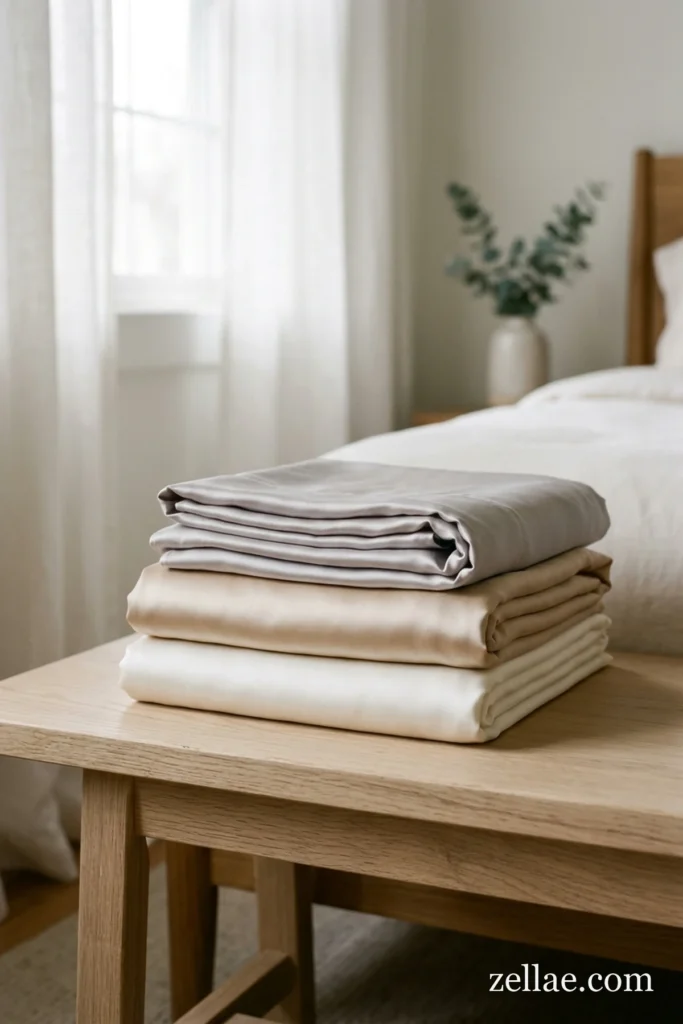
Online marketplaces are packed with $16 listings shouting “luxury mulberry silky satin” in the headline while burying “100% polyester” ten lines down in the fabric tab. Raw Grade 6A silkworm filament is costly to harvest and weave, so genuine 22-momme silk simply cannot sell profitably for $14.
Before you hit checkout on any listing (especially from a third-party seller), run through these five textile checks so you don’t pay silk prices for dressed-up polyester.
- Verify exact Grade 6A and momme specs: Reputable silk brands always state “100% Grade 6A Mulberry Silk” alongside a clear weight like 22 momme on both sides. Vague claims like “pure silk feel,” “ice silk,” or hidden “silk front, cotton back” blends cut corners right where your cheeks rest.
- Check real OEKO-TEX Standard 100 certification: Look for verified certification confirming the dyed fabric tested free of harsh finishing resins, formaldehyde, and irritating heavy-metal dyes. That’s a non-negotiable check when a pillowcase presses against bare skin for eight hours every night.
- Try the sheen and palm-warmth test: Real mulberry silk glows with a soft, pearlescent luster that shifts gently in daylight and warms quickly against your palm. Polyester satin bounces back a harsh, mirror-like white glare and stays slick and cool like thin plastic.
- Compare hidden zippers vs. envelope closures: Envelope flaps (like Brooklinen and Bedsure) leave zero metal hardware to catch long curls, though slick pillows can slowly slide out. Concealed YKK-style zippers (like Slip, Quince, and Kitsch) keep pillows locked neatly inside as long as the seam sits recessed.
- Use realistic price floors as your radar: Expect roughly $45 to $50 at the entry end for honest direct-to-consumer 22-momme mulberry silk (Quince) and $65 to $99 for heritage beauty labels (Brooklinen, Slip, Blissy). Anything promising 22-momme silk under $25 is almost certainly polyester or a thin low-grade blend.
Still skeptical after your package arrives? Pull one tiny loose thread from the inside hem and touch it carefully to a flame over a sink. Real protein silk stops burning almost instantly, smells faintly like singed hair, and crumbles into dry powdery ash. Polyester melts straight into a hard, glossy black plastic bead.
How to Wash Mulberry Silk Without Ruining the Sheen
Most “my expensive silk turned dull and scratchy” horror stories have nothing to do with defective fabric. The real culprit is everyday laundry detergent. Standard stain-fighting liquids contain protease enzymes built to break down protein spills like egg or sweat. Because mulberry silk is a protein fiber, those enzymes slowly chew away its smooth outer shine.
Follow this easy wash routine once or twice a week so your mulberry silk pillowcase stays buttery and glossy for years instead of months.
- Flip inside out into a fine mesh bag: Zipping the case inside out and sliding it into a dedicated delicates bag shields delicate charmeuse floats from washer agitators, stray bra hooks, and zipper teeth.
- Switch to a pH-neutral, enzyme-free wash: Skip Tide, Persil, bleach, and liquid fabric softener (which coats silk in a dull, waxy film). Use one capful of Heritage Park Silk & Wool Detergent, The Laundress Delicate Wash, or Tenestar Silk Wash.
- Keep water cold and cycles short: Pick cold water (86°F / 30°C max) on the shortest gentle or hand-wash cycle with low spin. Washing by hand in a clean basin? Soak for three to five minutes only, since wet silk loses strength if left sitting in water.
- Roll in a white towel instead of wringing: Never twist wet mulberry silk like a washcloth. Twisting stretches wet protein fibers into stubborn pale creases. Lay the damp case flat on a clean white towel, roll it up, and press gently to blot excess water.
- Air-dry away from direct sunlight: Drape your pillowcase smoothly over an indoor drying rack out of direct UV rays, which yellow ivory silk and stiffen fibers. If creases bug you, steam lightly or cool-iron inside out while slightly damp.
One quick trick for hair-mask nights: if you sleep in heavy treatments or follow our pre-wash scalp oiling routine, swap onto a spare $12 satin pillowcase until wash day. Keeping heavy botanical oils off your good mulberry silk prevents stubborn grease halos and stretches its lifespan.
6 Textile & Hair-Care Habits to Get More Out of Your Pillowcase
Swapping your pillowcase is one of the easiest bedtime upgrades in beauty, yet small nightly habits decide whether you actually wake up to calmer curls and clearer skin. Pair whichever fabric you pick with these six practical rules.
- Never hit the pillow with soaking-wet hair: Wet keratin strands stretch and snap far more easily than dry hair, a core warning in the American Academy of Dermatology’s healthy hair care tips. Diffuse or air-dry at least 85 percent before lying down, even on 22-momme silk.
- Look for certified low-chemical bedding: Whether you buy mulberry silk or polyester satin, check for verified OEKO-TEX Standard 100 testing so residual dyes and textile finishes don’t irritate sensitive cheeks or scalp edges.
- Own two pillowcases so you actually wash them: Dermatologists recommend swapping pillowcases every three to four days if you’re breakout-prone, and once a week at minimum for everyone else. Keeping a fresh backup makes mid-week swaps automatic right after your everything shower routine.
- Skip tight elastics at bedtime: Even a $90 silk pillowcase can’t rescue strands snapping inside a thin cotton hair tie. Gather waves loosely at the crown in a high pineapple with a wide silk scrunchie, or pull out your claw clip right before lights out.
- Give leave-in creams and serums five minutes to settle: Pressing freshly applied hair oils or thick occlusive night balms straight into mulberry silk leaves darkened spots that take extra soaking to lift. Wait five quick minutes so products sink in before your head hits the pillow.
- Watch for rough rings, hangnails, and stubble: Charmeuse silk floats snag surprisingly fast on jagged nails, pronged jewelry, and coarse beard stubble. File rough nail edges smooth, and lean toward champagne, charcoal, or taupe shades if you share the bed with pets.
Frequently Asked Questions
Does a silk pillowcase actually prevent sleep wrinkles?
Silk won’t erase deep expression lines or replace daily sunscreen and retinoids, yet it genuinely cuts down on mechanical sleep creasing. Because 22-momme charmeuse lets your cheek glide smoothly instead of tugging like textured cotton, side and stomach sleepers wake up with fewer morning pillow lines and less repeated folding stress on delicate under-eye skin.
How often should you wash silk or satin pillowcases for acne?
If you get cheek or jawline breakouts, wash your pillowcase every three to four days and flip to the clean reverse side on night two. Even the cleanest-looking silk or satin case collects sebum, dry shampoo, drool, and styling cream fast. Because polyester satin holds oils right on top of the weave, regular washes matter even more.
Is “bamboo silk” real silk or just marketing?
“Bamboo silk” is marketing shorthand for bamboo viscose or lyocell, a semi-synthetic cellulose fiber regenerated from bamboo pulp rather than silkworm protein. Quality bamboo lyocell feels cool, soft, and vegan-friendly for hot sleepers, though it absorbs slightly more skincare than mulberry silk and wrinkles faster out of the wash. Check the fiber tag carefully so you pay viscose prices, not pure mulberry silk prices.
What momme weight is best for hair frizz and everyday durability?
Twenty-two momme is the go-to standard for a silk pillowcase for frizz control and daily wear. It uses roughly 16 percent more silk by weight than 19-momme fabric, giving you noticeably stronger seams over three to five years without feeling heavy or trapping summer heat the way 30-momme silk sometimes can.
Should curly or coily hair still use a bonnet with a silk pillowcase?
Yes. If you have 3B to 4C curls, braids, or locs, pairing a lined bonnet or scarf with a smooth silk or satin pillowcase gives you dependable overnight protection. Your bonnet holds curl clumps neatly in place, while the pillowcase acts as a frizz-free safety net whenever that bonnet slips off around 4 a.m.
When you look at the silk vs satin pillowcase choice honestly, there’s no universal winner, only the right match for your sleep style. Grab a $12 to $19 Kitsch or Bedsure satin pillowcase for easy machine-wash frizz relief on a budget. Sleep warm or fight static? Invest $45 to $89 in 22-momme Grade 6A mulberry silk, then pair it with our hair care guides.